

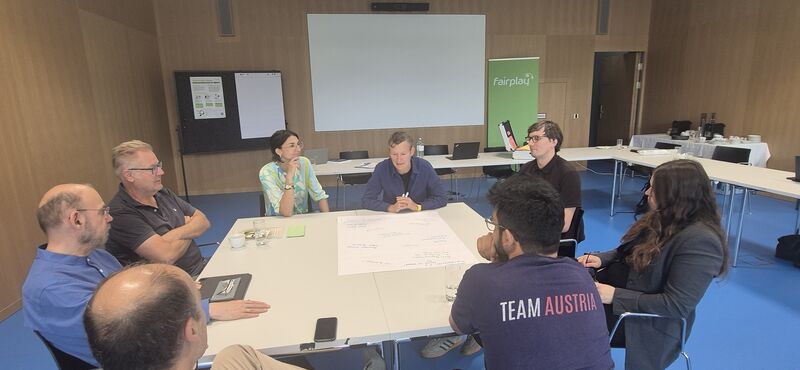
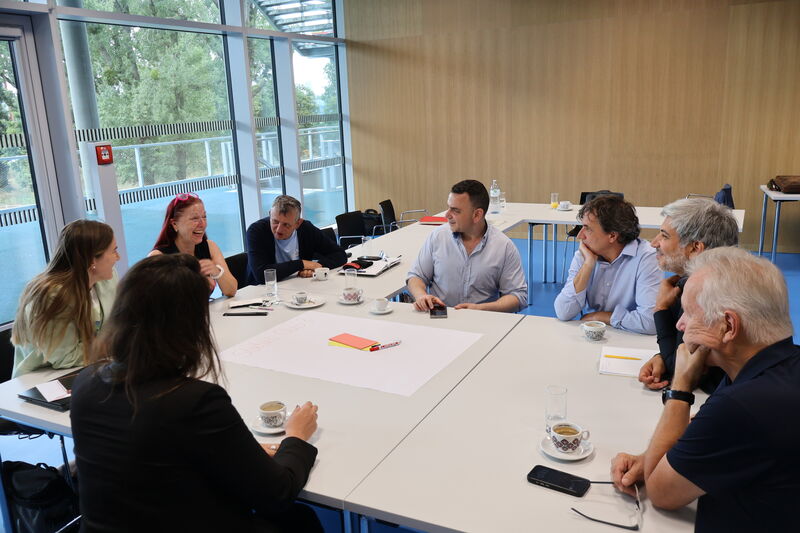
On July 6, 2026, the fairplay Initiative at the VIDC, together with the Coalition to Counter Online Antisemitism (CCOA)—coordinated by the Institute for Strategic Dialogue (ISD)—hosted a roundtable discussion titled “Together Against Antisemitism in Sports” at the Sport Arena Wien. The goal of the event was to discuss current challenges in addressing antisemitism in sports, to bring together stakeholders from sports, civil society, and politics, and to identify concrete courses of action for clubs and associations.
Antisemitism is not a marginal phenomenon, but rather an expression of societal developments that are also reflected in sports. At the same time, sports offer great potential for prevention: they create spaces for interaction, promote democratic values such as respect, fairness, and solidarity, and can make an important contribution to countering exclusion and discrimination. Against this backdrop, the fairplay Initiative is developing practical support services for organized sports.
A central part of the program was the presentation of the new guidelines on antisemitism in sports, which were developed by fairplay. The guidelines are aimed at sports clubs and associations and offer concrete recommendations for prevention, raising awareness, and professionally addressing antisemitic incidents. They are intended to support decision-makers in recognizing antisemitism at an early stage, taking appropriate action, and establishing sustainable structures to combat discrimination.
During the roundtable, representatives from sports organizations, Jewish institutions, politics, and civil society discussed current challenges and existing courses of action. Participating organizations included, among others, Maccabi Vienna, Hakoah Vienna, the Jewish Community of Vienna (IKG), the National Fund of the Republic of Austria for Victims of National Socialism, the Austrian Olympic Committee (ÖOC), as well as numerous sports federations, umbrella organizations, and other partner organizations.
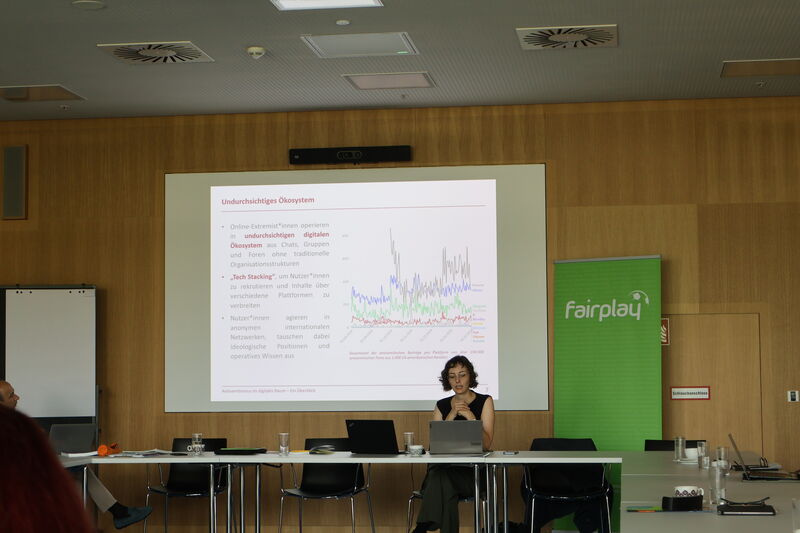
Solveig Barth (CCOA) presented attendees with an overview of antisemitism in the digital space and the hybrid threat landscape. After all, even when antisemitism occurs online, it has an impact on the offline world—a connection that can be observed particularly in sports (e.g., it can lead to dropouts).
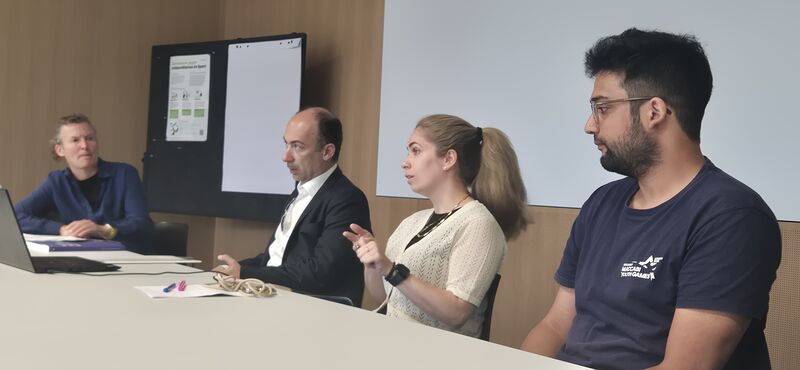
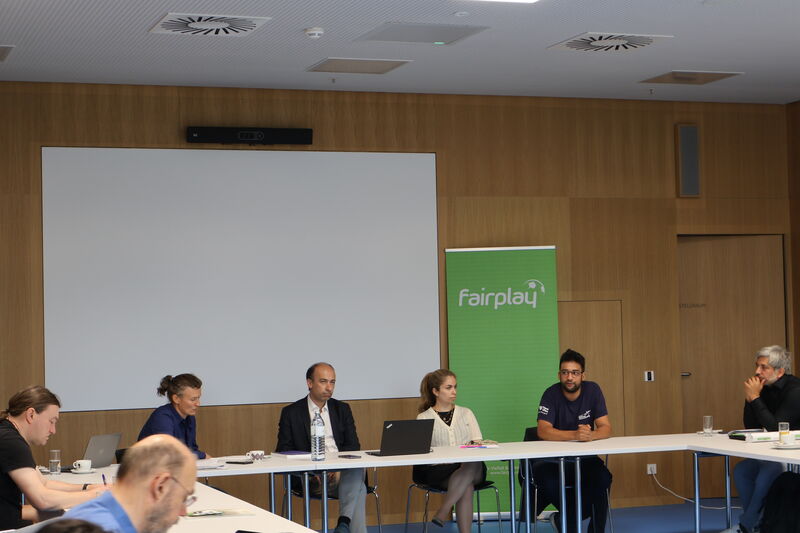
During the panel discussion with Betty Kricheli (IKG Youth Division), Antonio Martino (Federal Chancellery), and Ruben Schreiber (Maccabi Vienna), it became clear that antisemitism in sports is often underestimated and that clubs frequently need more support in dealing with incidents. The participants emphasized the importance of clear lines of responsibility, accessible educational programs, and close cooperation between sports organizations, experts, and civil society institutions. It was also highlighted that prevention efforts must be long-term and can only be successfully implemented through collaboration.
The roundtable also provided a space for exchange, networking, and the development of shared perspectives. The wide variety of organizations represented underscored the shared interest in resolutely countering antisemitism in sports and further strengthening sports as a space for diversity, respect, and democratic participation.
The event took place in cooperation with the Coalition to Counter Online Antisemitism (CCOA). Coordinated by the Institute for Strategic Dialogue (ISD), this European initiative brings together experts from education, research, politics, and civil society to jointly counter antisemitism—particularly in the digital sphere—and to build sustainable partnerships across ten European countries.
The fairplay Initiative would like to extend its sincere thanks to all speakers, panelists, and participants for the engaged discussion and looks forward to incorporating the ideas developed together into its ongoing work toward a discrimination-free sport.
Download Guideline: Together Against Antisemitism (german only)
Download Poster (german only)
