
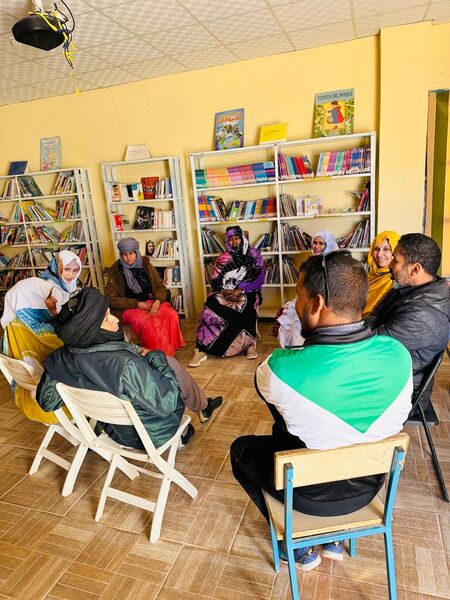
In the context the Sahrawi refugee camps near Tindouf, Algeria, sport is more than recreation - it is a tool for psychosocial well-being, education and social cohesion. The project “Inclusive Sport for Young Sahrawi Refugees”, coordinated by the Sport Inclusion Network (SPIN) in partnership with Unione Italiana Sport Per tutti (UISP) seeks to strengthen inclusive sport structures for children and youth living in one of the world’s longest-standing refugee contexts. The project is funded by the Austrian Ministry of Sport and UISP.
Implemented in close cooperation with the Sahrawi Ministry of Education, the 18-month initiative (December 2024–May 2026) aims to empower young refugees - especially girls and youth with disabilities - through structured, rights-based and inclusive sport activities.
Background: A protracted crisis and the role of sport
Since 1975, Sahrawi refugees have lived in five camps in southwestern Algeria, namely Laayoune, Smara, Boujdour, Ausserd and Dakhla. Estimates suggest that up to 170,000 people reside in the camps, while UNHCR directly supports around 88,000 of the most vulnerable refugees.
The camps are located in a harsh desert environment marked by extreme temperatures, limited infrastructure, economic scarcity and recurring environmental challenges such as sandstorms and flooding.
Young people face particularly acute challenges. Although schools operate in the camps, limited resources, insufficient recreational spaces and a lack of trained physical education staff undermine both educational quality and youth development. A 2021 participatory assessment highlighted the urgent need for more play and sport opportunities, especially for girls and young women.
While the Sahrawi Ministry of Youth and Sports organizes annual sporting events - including football and volleyball tournaments and an international marathon - resources remain extremely limited. Only around USD 70,000 per year is available for all sports activities across the five camps.
Infrastructure, equipment and qualified coaches are in short supply.
Against this backdrop, SPIN was approached in 2022 to contribute its international expertise in sport for development and social inclusion.
About the partners
The Sport Inclusion Network (SPIN) emerged from a European collaboration of sport and civil society organizations committed to combating discrimination and promoting equal access to sport. Its founding members include organizations such as the Vienna-based fairplay initiative, the Football Association of Ireland, and UISP in Italy.
Over the past decade, SPIN partners have implemented numerous EU-funded projects addressing refugee inclusion, gender equality and anti-discrimination in sport across Europe and in parts of Africa.
Notably, UISP has prior experience working with Sahrawi refugee communities, providing valuable contextual knowledge and established relationships on the ground.
The project aligns with key Sustainable Development Goals (SDGs), including:
- SDG 3 (Good health and Well-being)
- SDG 4 (Quality Education)
- SDG 5 (Gender Equality)
- SDG 10 (Reduced Inequalities)
- SDG 16 (Peace, Justice and Strong Institutions)
Objectives: Inclusion, empowerment, and capacity-building
The project pursues three overarching objectives:
- Enhancing health and psychosocial well-being of marginalized children and youth through structured sport activities.
- Promoting inclusive and quality education, using sport to improve school participation and reduce dropout rates.
- Advancing gender equality, strengthening the self-determination and participation of Sahrawi women and girls.
More specifically, the initiative focuses on:
- Using sport as a vehicle for social inclusion and empowerment
- Developing psychosocial life skills such as self-confidence, teamwork, leadership and empathy
- Training trainers, teachers and coaches to create safe, non-discriminatory and gender-sensitive sport environments
- Building partnerships to ensure long-term sustainability
Target groups and reach
The project adopts a community-based approach and aims to reach:
- 15,000 schoolchildren through strengthened school sport programmes.
- 1,000 youth athletes, including approximately 500 girls and young women.
- 50 young people with disabilities, through adapted and inclusive sport activities.
- Up to 44,000 community members, through public events and awareness-raising activities
A key feature is the multiplier model:
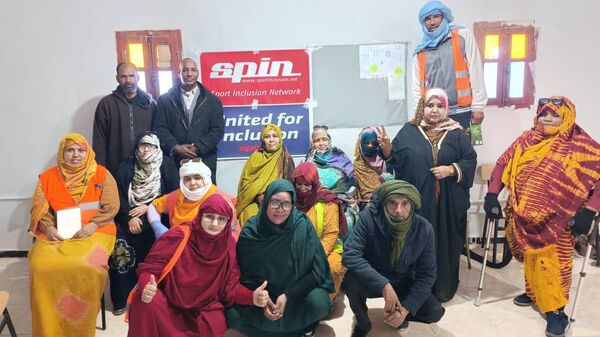
- 25 multiplier trainers received intensive training from international experts (May 2025).
- These multipliers subsequently trained over 70 local coaches, referees, teachers and club managers across the five camps (February 2026).
This cascading approach strengthens local ownership and ensures that knowledge and skills remain embedded in the community beyond the project’s duration.
Key activities
The project builds on existing sport structures while introducing new inclusive and pedagogical components. Core activities include:
- Training of multiplier trainers
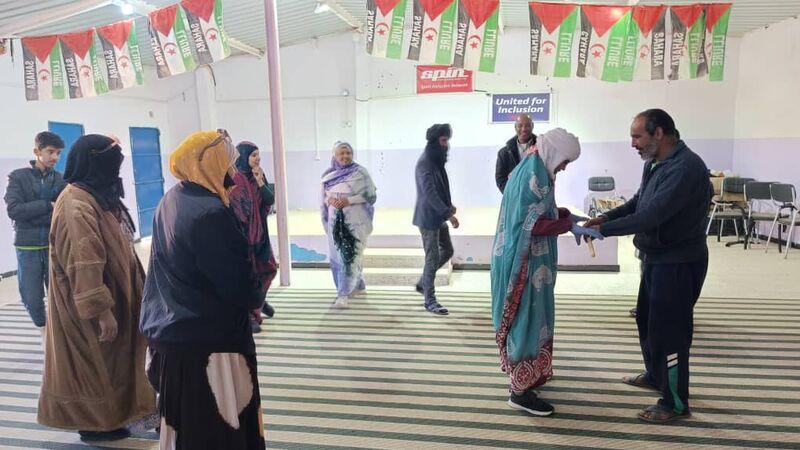
International experts from the SPIN network conducted a multi-day workshop in May 2025 focusing on inclusive coaching methods, gender equality and life skills transfer. Pilot activities are implemented directly during these trainings.
- Capacity-building for local coaches and educators
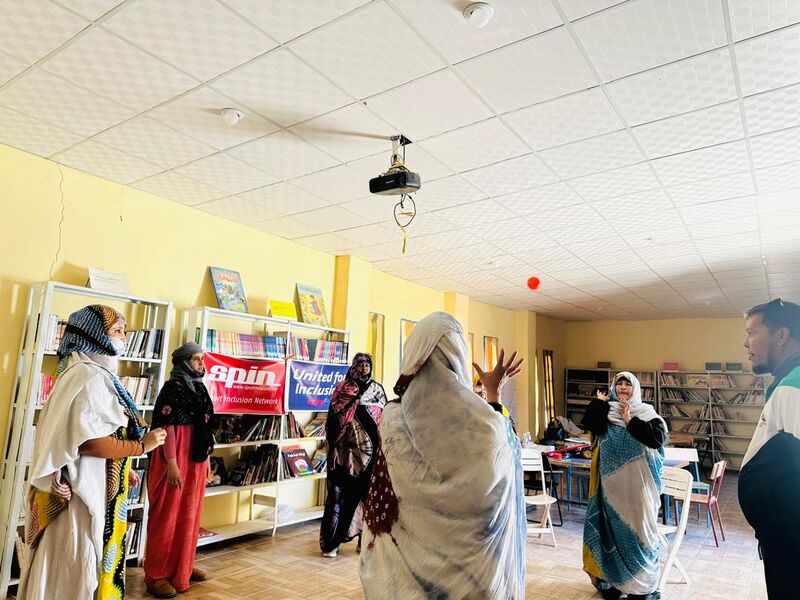
Newly trained multipliers organized five-day trainings in February 2026 in each of the five provinces (wilayas), equipping local sport actors with the tools to foster inclusion and translate sport experiences into life skills development
- Provision of equipment and support for inclusive events
In the remaining months of the project, basic equipment for football, volleyball, and other motion-based activities - including materials for referees - will be supplied. The project also supports the organization of annual tournaments, ensuring strong participation of girls and youth with disabilities.
- Communication and awareness-raising
Large-scale sporting events at the conclusion of the project in May 2026 will serve as platforms to promote inclusion, gender equality and positive social change. The initiative also engages Austrian and European stakeholders, fostering international solidarity and awareness around the context of Sahrawi refugees.
Achievements and expected impacts
While implementation runs until MAY 2026, the project has already achieved important milestones:
- Establishment of a strong multi-stakeholder partnership between SPIN, UISP, and Sahrawi authorities.
- Development of a structured training concept tailored to the local context.
- Mobilization of international expertise in inclusive sport methodologies.
The expected long-term impact includes:
- Improved psychosocial well-being and resilience among young refugees.
- Increased participation of girls and women in sport, challenging restrictive gender norms.
- Stronger local coaching capacity and sustainable sport structures.
- Enhanced social cohesion within and across the refugee camps.
By embedding inclusive sport within education and community life, the project contributes to a protective environment for youth and aligns with the Global Compact on Refugees’ emphasis on self-reliance and community empowerment.
Looking ahead
“Inclusive Sport for Young Sahrawi Refugees” demonstrates how sport can function as a low-cost, high-impact development tool in protracted crisis settings. By combining international expertise with strong local ownership, the initiative supports not only individual well-being but also community resilience.
In a context marked by decades of displacement and uncertainty, inclusive sport offers something profoundly important: structured spaces for joy, dignity, equality and hope.
Project impressions
For images and videos of the project's activities, head over to the Instagram channel and the SPIN website news section.
If you have any questions or general interest, please feel free to write to us at info [AT] sportinclusion [DOT] net
