
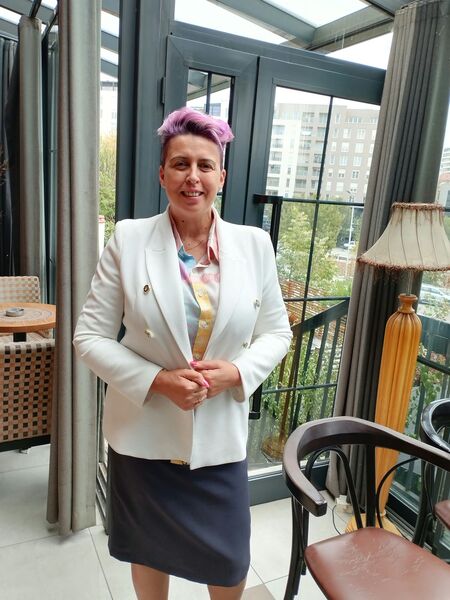
From Soccer Mom to Football Diplomat
She joins us for a deeply personal conversation about the development, breakthroughs, and persistent challenges that the sport faces in a Balkan state still heavily shaped by a history of multiple crises.
Armenda’s entry into football wasn't calculated; she was just a regular soccer mom with no personal background in the sport. She used to play basketball in her youth, but war and a forced relocation to Macedonia cut that short. Her connection to football came purely through her two sons, both goalkeepers. As a dedicated mom, she spent countless hours on the sidelines, often pulling double shifts because her boys played in different age groups. During those long waits, Armenda noticed a glaring gap: the players' sisters would tag along but had absolutely nothing to do, just killing time in the stands or wandering by the pitch. Seeing a total lack of sports programs for girls, she decided to take action. She asked her sons' club for a coach and a spare patch of grass just to keep the girls active. The response was immediate: within a month, by September 2019, she had around 25 girls showing up for regular practice.
The project ran into its first major roadblock when winter hit. Training outside was no longer an option, so Armenda asked the club for indoor gym hours. Instead of support, she faced a rigid gender barrier. The board turned her down, flatly stating they were "just girls" who weren't registered in any official league and were only playing "for fun." They suggested she send the girls home for the winter and scrap the project entirely. Armenda saw this as deep-rooted, structural discrimination. The girls shared the exact same drive, passion, and talent as the boys, but the system treated them as an afterthought. Even when the club changed hands later, the new owner refused to offer any financial backing. This hostility became a turning point. Instead of walking away, Armenda drew up a long-term strategy built on human rights and gender equality. She quickly realized that human rights weren't even on the radar in Balkan football—especially in Kosovo—where competition and commercial interests always overrode individual dignity.
To keep the girls' team alive, Armenda looked outside the rigid sports system for strategic allies:
• The President’s Office: Armenda went straight to the President of Kosovo. She immediately saw the societal value of the project and offered full backing. As a result, Armenda’s club became the first sports organization in the country permitted to feature the official Presidential logo on their jerseys. This lent huge credibility, helping win over skeptical parents and shifting women's sports from a niche hobby to a matter of national interest.
• Pristina Municipality: Another key ally was the Mayor of Pristina, whose own daughter had joined the team. Understanding the struggle firsthand, he secured a partnership that gives the club free access to all school sports facilities in the capital to this day.
• International Backing: Following this political groundwork, and despite major setbacks during the 2020 COVID-19 pandemic, Armenda secured an international breakthrough. By 2023, the club was fully backed by the UEFA Foundation for Children, with the Adidas Foundation stepping in to supply all gear and kits. These international funds finally allowed her to pay her coaching staff properly and build regional coordination.
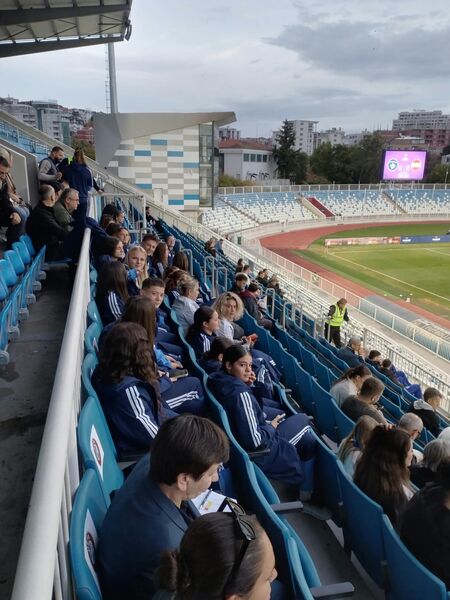
Alongside local backing, Armenda built a high-profile international relationship: a strategic partnership with FC Barcelona’s Barça Academy. This connection started in 2023 through Victor Estebam, a board member at Armenda’s club and her former UN colleague, who had previously founded Kosovo’s official Barça fan club (Penya Kosovar de Barcelona). Through this partnership, Armenda’s club runs official Barça Academy camps in the region. The 2024 camp brought together nearly 300 boys and girls, including children from the diaspora. A crucial win for Armenda during negotiations was demanding equal access for girls, securing dedicated slots for them, and pushing for female coaches on the camp's technical staff. The project made such an impact that FC Barcelona featured their success on their official website. Furthermore, Marc Bassas, the head of the Barça Academy, has been personally following the project's growth. As part of this exchange, the team traveled to Barcelona, where the players got to watch the Women’s Champions League semifinals at Camp Nou. It’s a massive step, opening up real opportunities for Kosovar talent to be scouted on a global stage.
Through Armenda’s groundwork, women’s football in Pristina went from a stigmatized hobby to a genuine trend. Before the club was founded, girls in Kosovo only had official leagues starting at U17—a stark contrast to boys, who started at U7. Today, the club’s girls compete successfully in newly created U13 and U15 leagues. Armenda’s current goal is setting up a U11 girls' league where, due to a lack of local female teams, they can compete directly in the boys' league. In terms of quality, the club has become the country’s premier talent pipeline. It provides the backbone for Kosovo’s youth national teams, including nine players in the current U19 squad and the captain of the U17 national team. To set a professional standard, Armenda hired the country’s most successful female coach—who also manages the national U19 team—making her the only female head coach in the entire national league.
Despite the wins, Armenda still fights old mentalities, especially among the players' fathers. While families willingly spend significant money on fees and expensive boots for their sons—viewing men's football as a financial investment for the family’s future—there is a culture of expecting everything for free when it comes to daughters. Many fathers still see women's football as a pastime with no economic value. On another front, Armenda identified refereeing as a hotspot for verbal abuse and hostility. To tackle this and put women in decision-making positions, she introduced referee training within her club. Today, around 25 players from her senior team are certified federation referees who manage youth league matches, noticeably lowering the tension on the pitch.
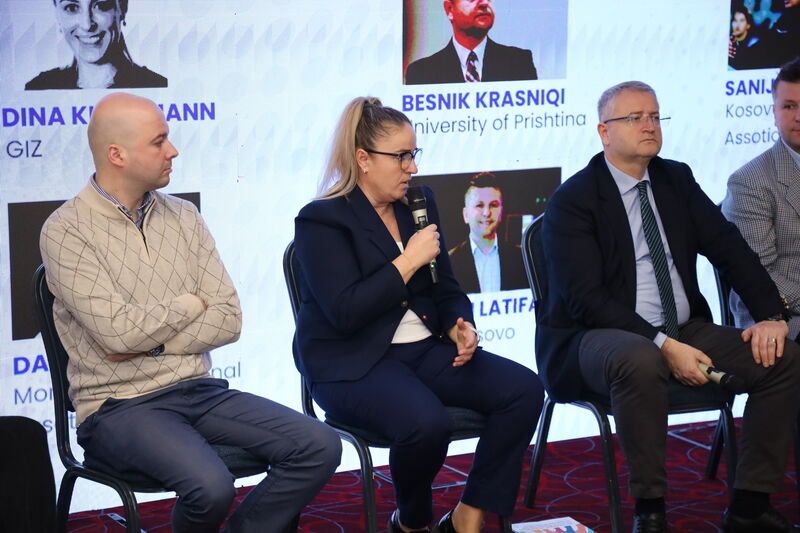
Drawing from her decades-long career within the UN, Armenda views football as a tool for peacebuilding, not just athletic competition. Through a joint project with the US Embassy, she set up girls' football teams in Serbian enclaves (like Gračanica and Štrpce) and ethnically mixed regions. The joint training and tournaments showed massive success, breaking down linguistic and ethnic barriers between Albanian and Serbian girls on the pitch within days. Academic education is equally central to Armenda’s philosophy. Noting that talented girls often neglected school for football, Armenda intervened. She holds players to staying in school or university, with the club helping out by arranging housing and coordinating practice schedules around classes. She recently secured a partnership with Webster University Geneva, giving her players a 30% scholarship for a new degree in Sports Management & Business Administration. Armenda constantly reminds her players that a sports career is short and unpredictable. Her goal is to prepare these women to become qualified managers, executives, or policymakers who will eventually change the face of Kosovar sports from the inside out.
https://www.fairplay.or.at/en/archive/from-the-soccer-mom-to-football-diplomat#top

https://www.fairplay.or.at/en/archive/from-the-soccer-mom-to-football-diplomat#top
https://www.fairplay.or.at/en/archive/from-the-soccer-mom-to-football-diplomat#top
